Habib Jalib was a prominent figure in Pakistani literature, known for his powerful poetry and activism. As a poet, he used his words to inspire and mobilize the masses, often challenging the status quo and advocating for social justice.
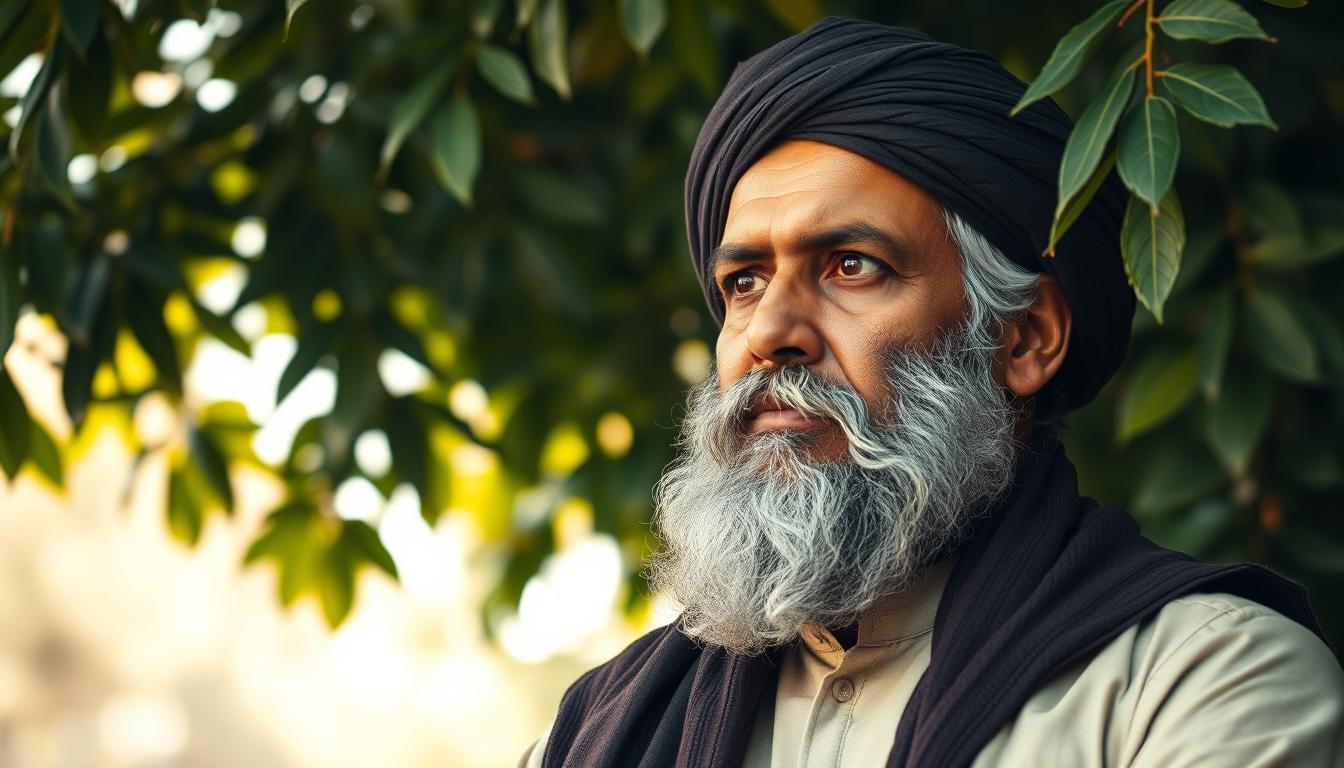
His contributions to Pakistani literature are still celebrated today, and his role in social and political movements continues to inspire new generations. As an activist, he was unafraid to speak truth to power, using his poetry as a tool for change.
Key Takeaways
- Habib Jalib was a celebrated Pakistani poet and activist.
- His poetry inspired and mobilized the masses, advocating for social justice.
- He played a significant role in Pakistani literature and social movements.
- His work continues to inspire new generations.
- Jalib’s activism was characterized by his fearless challenge to authority.
The Early Life and Background of Habib Jalib
The story of Habib Jalib begins in the early 20th century, a time of great change and upheaval. Born on March 24, 1928, in a small village in Hoshiarpur district, Punjab, British India, Jalib’s early life was marked by the socio-political turmoil of the era.
Birth and Family Origins
Jalib was born into a family with a strong cultural background. His father, Abdul Rahim, was a weaver, and the family belonged to the Julaha community, known for their weaving skills. This background in a traditional craft would later influence Jalib’s perspective on labor and social justice.
Education and Formative Years
Jalib’s education began in his local village school, where he was exposed to the works of great poets and writers. His early education instilled in him a love for literature and poetry, which would become the cornerstone of his activism. As he grew older, Jalib became increasingly aware of the social injustices around him, shaping his worldview and inspiring his future work.
Migration to Pakistan After Partition
Following the partition of India in 1947, Jalib migrated to Pakistan, a journey that had a profound impact on his life and work. The experiences during and after migration—witnessing displacement, violence, and the struggle for survival—deeply influenced his poetry, which began to reflect themes of justice, equality, and freedom. This period was formative in shaping Jalib’s identity as a poet and activist.
Jalib’s early life and background laid the foundation for his later work as a poet and activist. His experiences during the partition and subsequent migration to Pakistan not only shaped his worldview but also influenced his literary style and thematic concerns.
Habib Jalib: The People’s Poet
Habib Jalib earned the title of “The People’s Poet” due to his unique ability to express the hopes and frustrations of the masses through his poetry. His work was characterized by a deep sense of empathy and a strong commitment to social justice.
Poetic Style and Literary Influences
Habib Jalib’s poetic style was heavily influenced by his socialist ideology and his experiences living under various dictatorial regimes in Pakistan. His poetry is known for its simplicity, directness, and powerful use of language. Jalib’s work was influenced by other progressive writers and poets of his time, shaping his unique voice that resonated with the common people.
Using free verse and straightforward language, Jalib’s poetry addressed complex social issues, making it accessible to a wide audience. His literary influences were diverse, ranging from classical Urdu poetry to modernist and socialist literary movements.
Famous Works and Collections
Some of Habib Jalib’s most famous works include poems like “Daspehr” and “Zulmat.” These poems showcased his ability to craft verses that were both beautiful and thought-provoking, often focusing on themes of resistance and social change.
Jalib’s poetry collections, such as “Habib Jalib Ki Shairi,” have been widely read and studied. His work continues to be celebrated for its emotional depth and its role in inspiring social movements.
Recurring Themes of Justice and Freedom
A recurring theme in Jalib’s poetry is the struggle for justice and freedom. He often wrote about the exploitation of the working class, the oppression of women, and the need for democratic rights. His poetry served as a powerful tool for mobilization during times of political unrest.
Through his work, Jalib gave voice to the voiceless, highlighting the plight of the marginalized and challenging the status quo. His commitment to the cause of justice and freedom earned him a revered place in Pakistani literature.
Political Activism and Resistance
Habib Jalib’s activism was characterized by his unrelenting pursuit of justice and equality, inspiring generations to come. His life’s work was a testament to the power of resistance against oppressive regimes and the importance of standing up for the rights of the marginalized.
Socialist Ideology and Political Stance
Jalib’s adherence to socialist ideology was a defining aspect of his political activism. He believed in the principles of equality and justice, and his poetry often reflected his critique of capitalist systems and the exploitation of the working class.
His political stance was clear: he was a vocal advocate for the rights of the common man and a fierce critic of authoritarianism. Jalib’s commitment to socialism was not just theoretical; it was a guiding principle that informed his actions and writings.
Participation in Democratic Movements
Jalib actively participated in various democratic movements throughout Pakistan’s history. He saw these movements as crucial to challenging military dictatorships and promoting democratic governance.
- He was involved in the movement against Ayub Khan’s regime.
- Jalib also participated in protests against Yahya Khan’s military rule.
- His activism continued even during the dictatorship of Zia-ul-Haq.
Through his involvement in these movements, Jalib became a symbol of resistance against oppression.
Confronting Dictatorships and Imprisonment
Jalib’s resistance against dictatorships often landed him in trouble with the authorities. He faced imprisonment multiple times for his outspoken criticism of the government and his advocacy for democratic rights.
Despite the risks, Jalib remained undeterred, using his poetry as a weapon against oppression. His famous poem, “Dastoor,” is a powerful example of his resistance against dictatorship.
Jalib’s courage in the face of adversity inspired many, and his legacy continues to be celebrated by those who believe in the power of activism and resistance.
Cultural Impact and Enduring Legacy
As a poet and activist, Habib Jalib left an indelible mark on Pakistani literature and politics. His work continues to inspire and influence contemporary social and political discourse.
Influence on Pakistani Literature and Politics
Habib Jalib’s poetry was not just a reflection of his time but also a catalyst for change. His progressive views and commitment to social justice resonated with the masses, making his work a cornerstone of Pakistani literature. Jalib’s influence extended beyond literature into the political arena, where his words were used to challenge authoritarian regimes and advocate for democratic rights.
Posthumous Recognition and Tributes
After his death, Habib Jalib’s legacy has been celebrated through various tributes and recognitions. His contributions to Pakistani literature have been acknowledged by cultural and literary institutions, ensuring his work remains relevant.
Jalib’s Poetry in Modern Social Movements
Jalib’s poetry continues to be a powerful tool in modern social movements. His verses, which speak of resistance and freedom, are often recited during protests and rallies, inspiring a new generation of activists. The themes of justice and equality in his work remain pertinent, making his poetry a lasting influence on social discourse.
In conclusion, Habib Jalib’s cultural impact and enduring legacy are a testament to the power of his poetry and activism. His influence on Pakistani literature and politics, coupled with his continued relevance in modern social movements, underscores the lasting significance of his work.
Habib Jalib: A Lasting Legacy
Habib Jalib’s life and work continue to inspire generations, leaving an indelible mark on Pakistani literature and politics. As a poet and activist, Jalib’s contributions are a testament to the power of art in shaping social and political discourse.
A summary of his contributions reveals a steadfast commitment to justice, freedom, and democracy. Through his poetry, Jalib gave voice to the marginalized, challenging oppressive regimes and advocating for human rights.
In conclusion, Habib Jalib’s legacy serves as a reminder of the enduring impact of courageous art and activism. His work remains a powerful force in modern social movements, continuing to inspire those fighting for justice and equality.
FAQ
Who was Habib Jalib?
Habib Jalib was a renowned Pakistani poet and activist known for his contributions to Pakistani literature and his role in social and political movements.
What is Habib Jalib’s poetic style?
Habib Jalib’s poetic style is characterized by its simplicity and powerful expression, often focusing on themes of justice, freedom, and the struggles of the common people.
What were some of Habib Jalib’s most famous works?
Some of Habib Jalib’s most famous works include poems that highlighted his opposition to dictatorship and his support for democratic movements, with many of his poems becoming anthems for social and political change.
How did Habib Jalib’s early life influence his poetry?
Habib Jalib’s early life, including his migration to Pakistan after partition, significantly influenced his worldview and shaped the themes of justice and freedom found in his poetry.
What was Habib Jalib’s stance on socialism?
Habib Jalib adhered to socialist ideology, which is reflected in his poetry and activism, as he often advocated for the rights of the working class and criticized economic inequality.
How is Habib Jalib remembered today?
Habib Jalib is remembered as the “People’s Poet” and continues to have a lasting impact on Pakistani literature and politics, with his poetry remaining relevant in modern social movements.
What recognition did Habib Jalib receive after his death?
After his death, Habib Jalib received numerous tributes and recognitions for his contributions to Pakistani literature and his role in social and political activism.